CALL FOR CONFERENCE PAPERS: LONDON VIDEO ARTS: ‘An Oppositional Practice.’ Perspectives on Video: Art, Activism, Networks, Technology, then and now
Conference and Exhibition, February 26 – 28, 2027
Marylebone Campus, University of Westminster and Ambika P3, London
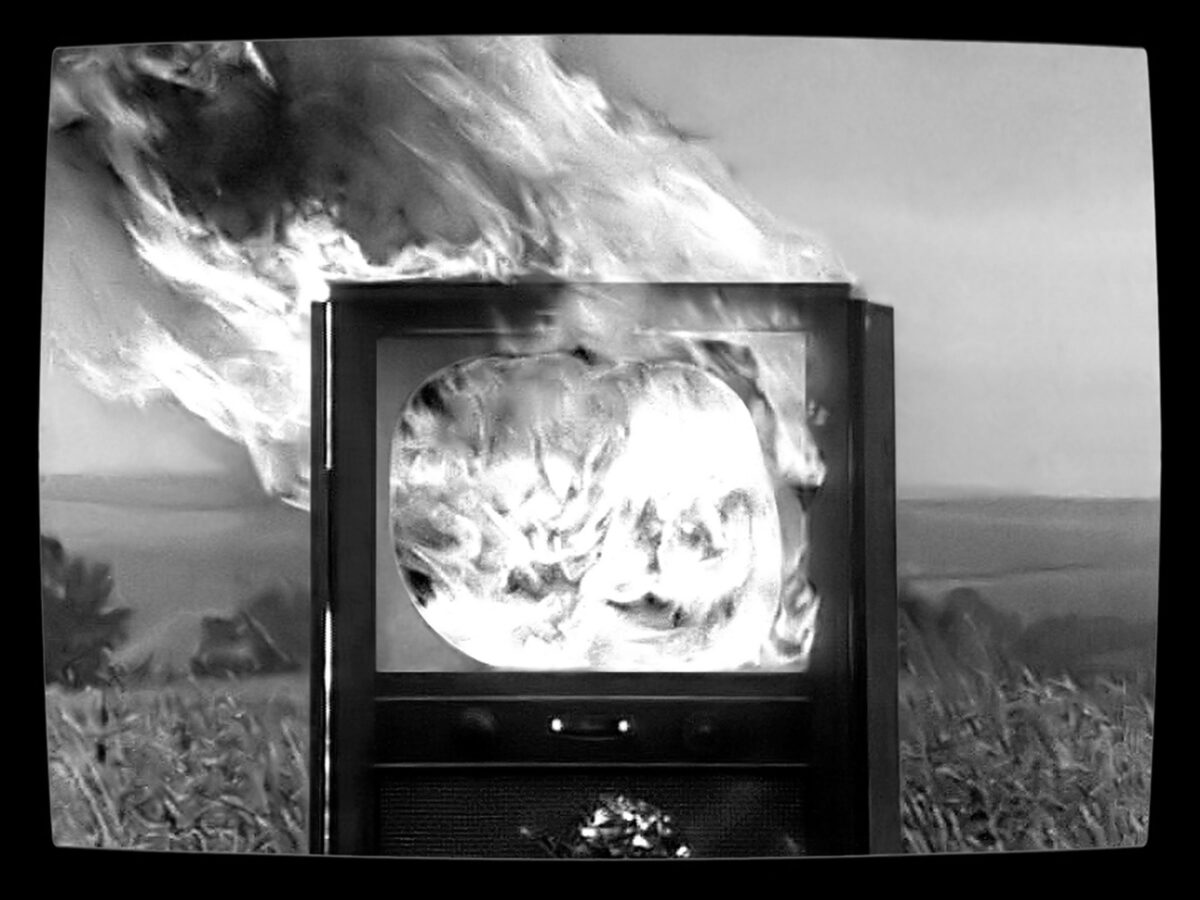
Deadline for paper proposals: Monday 2nd November, 17.00 GMT
Founded in 1976, London Video Arts formed part of the emergence of a heterogeneous network of artists and activists keen to explore video for its potential as an art form as well as a vehicle for community and radical expression.
In the potent space where underground culture intersected with technological experimentation, LVA had a distinct agenda. Led by artists, most of whom had background in the arts and had attended art school, LVA founding member Stuart Marshall identified the promise of an ‘oppositional practice’ and ‘the establishment of a critical relation to dominant technology and its representational practices.’ (Marshall: Screen: Winter 1984). The video art practice at LVA was thus engaged with a critique of television as broadcast, while simultaneously committed to finding new radical spaces and contexts to exhibit the medium: from TV monitors in galleries, public spaces, TV rental shop windows in the high street to cinemas and alternative screening spaces.
On the occasion of the 50th anniversary year of LVA’s formation, a reconsideration of video as an oppositional practice seems timely. How might current artists, curators and scholars learn from the strategies and collective practices developed at LVA and the wider culture of video collectives and exchange that burgeoned internationally from the 1970s? LVA’s own history was never confined to London: its members carried the work into Glasgow, Newcastle, Cardiff and Dundee, and into dialogue with video communities in New York, Toronto, Paris and Amsterdam. What can tracing these regional and international networks tell us about how oppositional media cultures take root and travel? Where do we see comparable collective, activist or community-based video practices at work today, in the UK and beyond? And what might contemporary artists and activists working with moving image, many operating in a landscape of platforms, algorithms and networked distribution rather than broadcast, recognise of their own concerns in LVA’s early experiments with autonomy, access and collective authorship?
MIRAJ, in partnership with LUX, invites abstracts to debate these questions and reflect on the legacy of LVA at a two day conference at the University of Westminster and associated exhibition at gallery Ambika P3 on 26-27 February 2027.
We invite 20 minute papers and pre-constituted panels with a maximum of 4 speakers that:
- consider the definition of video art since its inception and the major transformations the concept has gone through;
- review and reframe existing video histories;
- examine the organisational model of the video collective, and its modes of
circulation and distribution; - explore the international and regional video networks of which LVA was part,
- share new research into underacknowledged video histories and figures;
- address the heterogeneous and intersecting ecologies of video practice: whether conceptual documentation and modernist experiment, radical campaigning and community engagement, and the later return to representational form;
- address how technological changes have determined video practices, cultures and ecologies;
- examine how London Video Arts addressed the hegemony of broadcast TV;
- explore the determining role of televisual culture and production in the development of video practice: it’s forms and address.
- consider what contemporary collective, activist or community-based video practices, in the UK and internationally, share with or depart from LVA’s model of artist-led organising
- consider how video art explored the limits of its material, processes and forms;
- discuss the role of video to address political and social urgencies and injustices;
- question the legacy of analogue video technology in the digital age;
- address the challenges of how to archive, conserve and exhibit fragile historic video technologies;
- explore how museums and galleries understand video art today.
Please submit your abstract (max 250 words), with contact details, affiliation and short bio (max 100 words) to miraj@westminster.ac.uk CFP submission deadline: 17.00 (GMT), November 2nd 2026
LONDON VIDEO ARTS: ‘An Oppositional Practice.’ Perspectives on Video: Art, Activism, Networks, Technology, then and now is part of LVA50 – a year-long programme marking the 50th anniversary of the formation of London Video Arts (LVA) – including exhibitions, touring screenings, events, a symposium and a publication, delivered with partners across the UK.
This year long programme is developed by LUX in partnership with Moving Image Review & Art Journal (MIRAJ), the University of Westminster’s Centre for Research and Education in Arts and Media (CREAM) and a network of UK venues including Spike Island (Bristol), Ambika P3 (London), BALTIC (Gateshead), g39 (Cardiff), LUX Scotland (Glasgow) and Vivid Projects (Birmingham).
LATEST ISSUE
MIRAJ Volume 15, Issue 1
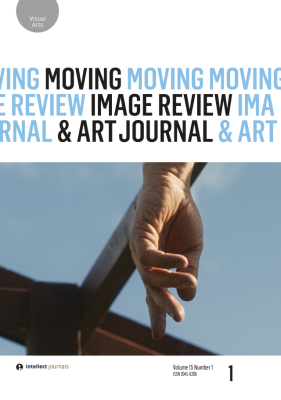
Courtesy Onyeka Igwe. Commissioned by High Line Art. Presented by the High Line and NYC Parks.
MIRAJ Volume 15 Issue 1 marks 15 years of Moving Image Review and Art Journal as an Intellect title. The issue features diverse models of contemporary, international, and alternative practices in the field of artists’ moving image, presented through conversation, interviews, and reports. While no specific theme links these together, they all testify to a renewed and vital sphere of media experiments engaged with generating new understandings of what alternative film practices can do.
Find out more here.
BACK ISSUES
MIRAJ back issues are available at intellectbooks.co.uk
CONTACT MIRAJ
MOVING IMAGE REVIEW AND ART JOURNAL (MIRAJ)
Moving Image Review and Art Journal (MIRAJ) is the only peer reviewed academic journal devoted to the study of the moving image as a cultural form. MIRAJ offers a widely distributed international forum for debates surrounding all aspects of artists’ moving image and media artworks.
Part of the publisher Intellect’s stable of art and design journals, MIRAJ was founded by Professor Catherine Elwes in 2011, who remained its editor in chief until 2017. Under her editorship, the journal has grown to be one of the most respected academic sources for writing in the field, encompassing the scholarship of the eminent and established alongside fresh insights by emerging scholars. The journal continues at CREAM under the co-editorship of Michael Mazière, Lucy Reynolds, with Rachel Garfield of the School of Arts and Humanities, Royal College of Art, as Scholarly Editor, and Clare Carolin of Kings College as Reviews Editor.
MIRAJ is published twice a year in print and as an e-journal. Contributions to the journal are encouraged by open submission and a call for papers, in response to a theme or reflecting the writer’s particular area of study. MIRAJ publishes the following types of writing: scholarly articles (5000–8000 words); opinion pieces, feature articles and interviews (3000-4000 words); review essays of books, individual works, exhibitions and events (3000-4000 words). Scholarly articles will be blind peer-reviewed and feature articles and review essays can be peer-reviewed on request. All writings should propose a central idea or thesis argued through a discussion of the work under review.
Follow us on Instagram or Facebook.
E-mail: miraj@cream.ac.uk