Birkbeck Cinema, 43 Gordon Square, London WC1
Click here to book your place.
An archive of feminist moving image culture from the 1970s and 1980s does not survive intact. It survives unevenly: complete works alongside fragments, fragments alongside descriptions of what once existed, descriptions alongside blank space where nothing at all remains. The standard response to this condition is often technical: preservation as rescue, digitisation as solution, the missing treated as a problem to be minimised or apologised for.
How might the precarities of the feminist film and video archive be imagined differently? What role do creative and curatorial methodologies play in drawing attention not just to the absences in the archive, but to offering new models of feminist visibility? What forms of scholarly and public knowledge become possible when an archive is activated through handling, conversation and collective reconstruction, rather than preserved through enclosure?
Could an archive be understood not as a fixed repository to be protected, but as an ongoing, collective and necessarily incomplete practice, one in which gaps function as questions, fragments function as evidence and gathering itself is the research method?
Could the model of a ‘living archive’ offer a different proposition: where incompleteness is not a deficiency in the archive but its structuring condition, and where precarious, marginalised or deliberately under-resourced cultural production build incompleteness in as a method, rather than treating it as a failure to be corrected? Instead of the archival ‘house arrest’ once described by Jacques Derrida, might a ‘living archive’ be closer to the ‘potentialities (and possibilities)’ of Griselda Pollock’s virtual museum, or Lis Rhodes’ compelling ‘crumpled heap’ of history?
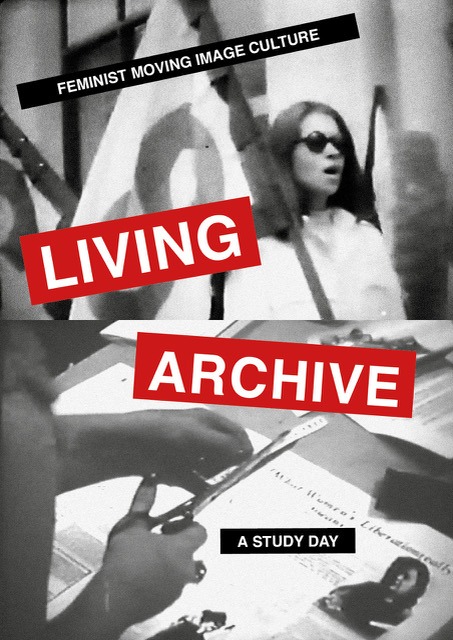
With these questions as starting points, please join us for a Living Archive study day: shared discussions, an exploratory workshop and presentations from archivists, curators, artists and scholars, followed by a BIMI public screening. This discursive feminist gathering seeks perspectives and reflections on how a living feminist archive might be reimagined, recovered and reactivated, at a time when the fragility of historic feminist film and video feels increasingly urgent.
Schedule
11am – 1pm | Morning Welcome and coffee
How to reconstruct a lost feminist film An opening workshop of propositions and provocations. Artist-curators Sarah Wood (sarahwoodworld.com) and Selina Robertson (Club des Femmes) invite participants into a collaborative act of serious play — devising hands-on strategies for feminist archival reconstruction. Participants will explore seemingly lost feminist histories through oral recordings, caption-less images, objects, sounds and text fragments. Considering both the embodied experience of archival work and strategies for reconstruction, their workshop explores the archive as a site for impermanence and ephemerality which Diana Taylor proposes in her concept of the archive and the repertoire.
1pm – 2pm | Lunch
2pm – 4pm | Afternoon Presentations on feminist archival practices from curatorial, creative and archival perspectives open an afternoon of reflection and wider discussion, following on from the morning’s workshop:
- Sonia García López (Universidad Carlos III de Madrid) reflects on the material problems and methodological challenges involved in preserving Rosina Prado’s film, Prijodiat y ujodiat poezda (Trains Will Come and Go, 1961).
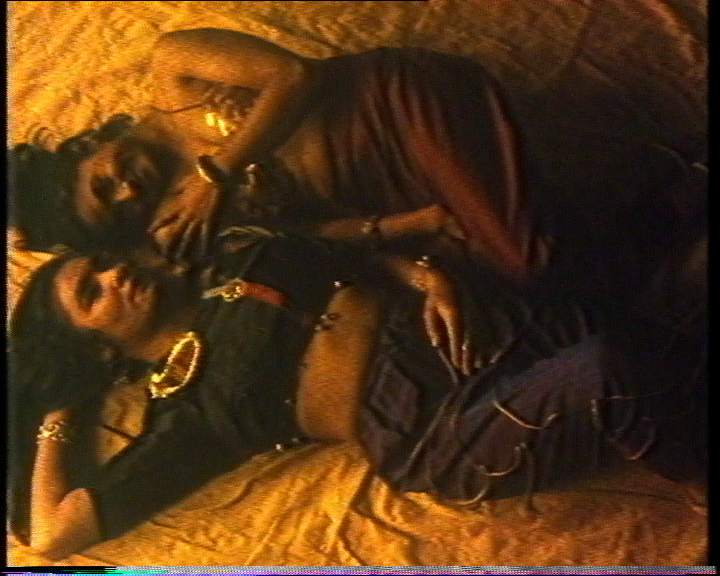
- Damilola Lemomu discusses her curatorial research project in the June Givanni Pan African Cinema Archive, ‘From 1997 to Now: Re-activating Black Women’s Moving Image Histories.’
- Charlotte Procter and Reman Sadani share the different preservation strategies feminist distribution collective Cinenova employs to provide access and circulate to the collection
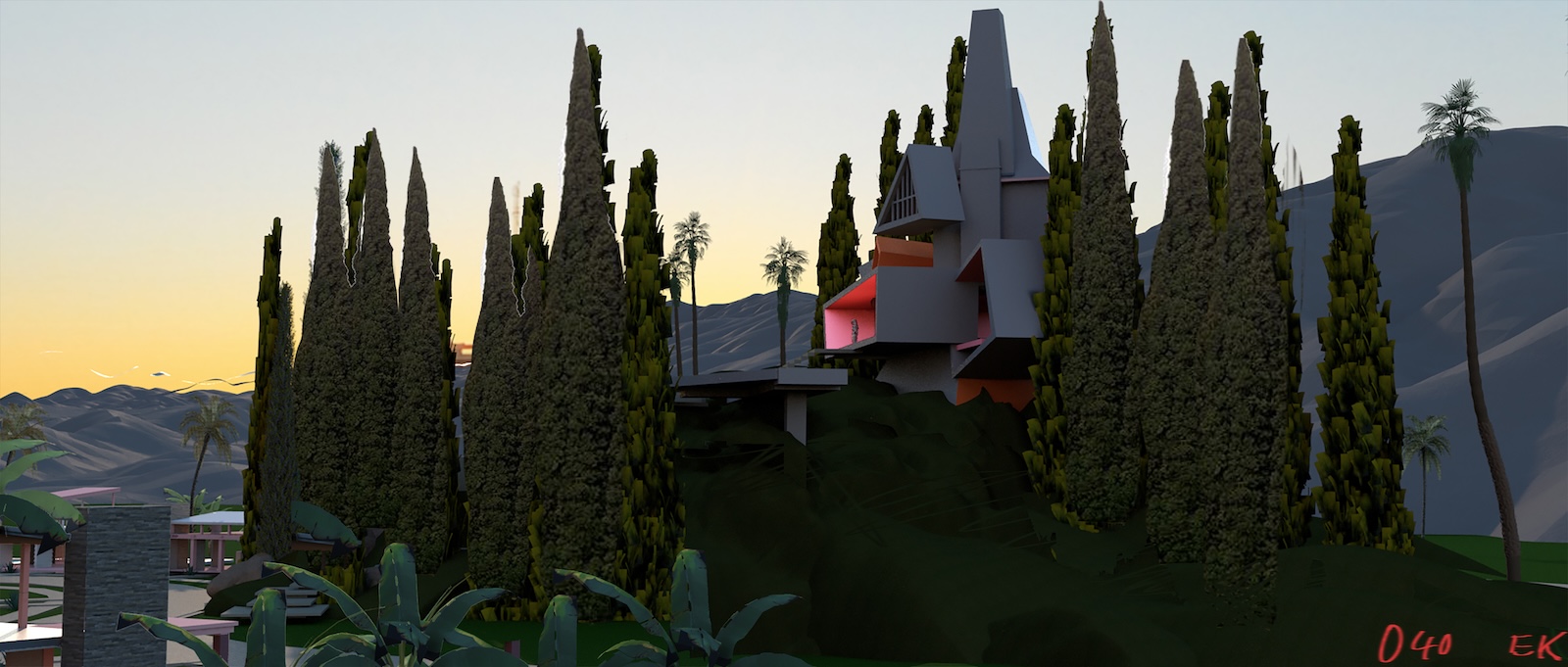
- Erika Tan discusses how her moving image works, including Barang Barang and Apa Jika: The Misplaced Comma, explore creative practices of speculation and fabulation to unravel overlooked narratives and reframe established histories and systems of knowledge.
4pm – 5pm | A feminist living archive for the future? Reflecting on a day of discussion, presentations and creative workshop reconstructions, participants are invited to share their questions, experiences, expertise and perspectives on feminist archiving in a collective discussion. How might feminist archival practices be shaped and reimagined for the future, and what is needed to make that possible?
6.30pm | BIMI Screening (open to the public and all study day attendees) The Long Road to the Director’s Chair, followed by discussion with Selina Robertson, a recorded message from director Vibeke Løkkeberg, and discussion with Barbara Evans (LWFG)
This event is supported by the Centre for Research in Education, Art and Media (CREAM), University of Westminster, with additional support from Faculty Strategic Research and Innovation Fund at Birkbeck.